






















The operation and management of educational and training institutions are two separate things.
Time:2025-12-22
Source:Artstep
Many campuses suffer from poor management, poor performance, and even closure, and generally cannot escape the following three types:
- 1. Do not understand operation
- 2. Manage alternative operations
- 3. Do not understand management
What is the operation of education and training institutions?
Operation is like a "war" between education and training institutions and external peers, focusing on how to promote the entire business chain marketing work, from event planning to market customer acquisition, from customer invitation to sales conversion, from contract management to healthy and sustainable teaching performance.
The core of operation is not just enrollment, but 'doing things', pursuing growth and expansion of performance, and increasing profits. The operation of educational and training institutions focuses on the core business processes from acquiring customers to delivering services, in order to realize the commercial value of the institution.
The operation of educational and training institutions cannot be replaced by a single market, sales, or teaching experience, which precisely explains why many principals, marketing directors, and teaching directors from large companies and institutions cannot independently run their own institutions.
The operation of educational and training institutions requires the accumulation of experience in marketing, sales, teaching services, and full business chain management. Without knowledge and ideas in any sector, it will be a risky nude swimming. They lack objective analysis and thinking about their achievements, as well as rational cognition and reflection on problems and failures.
The operation of educational and training institutions includes the following aspects:
1. Marketing and Sales Operations - Marketing Promotion:
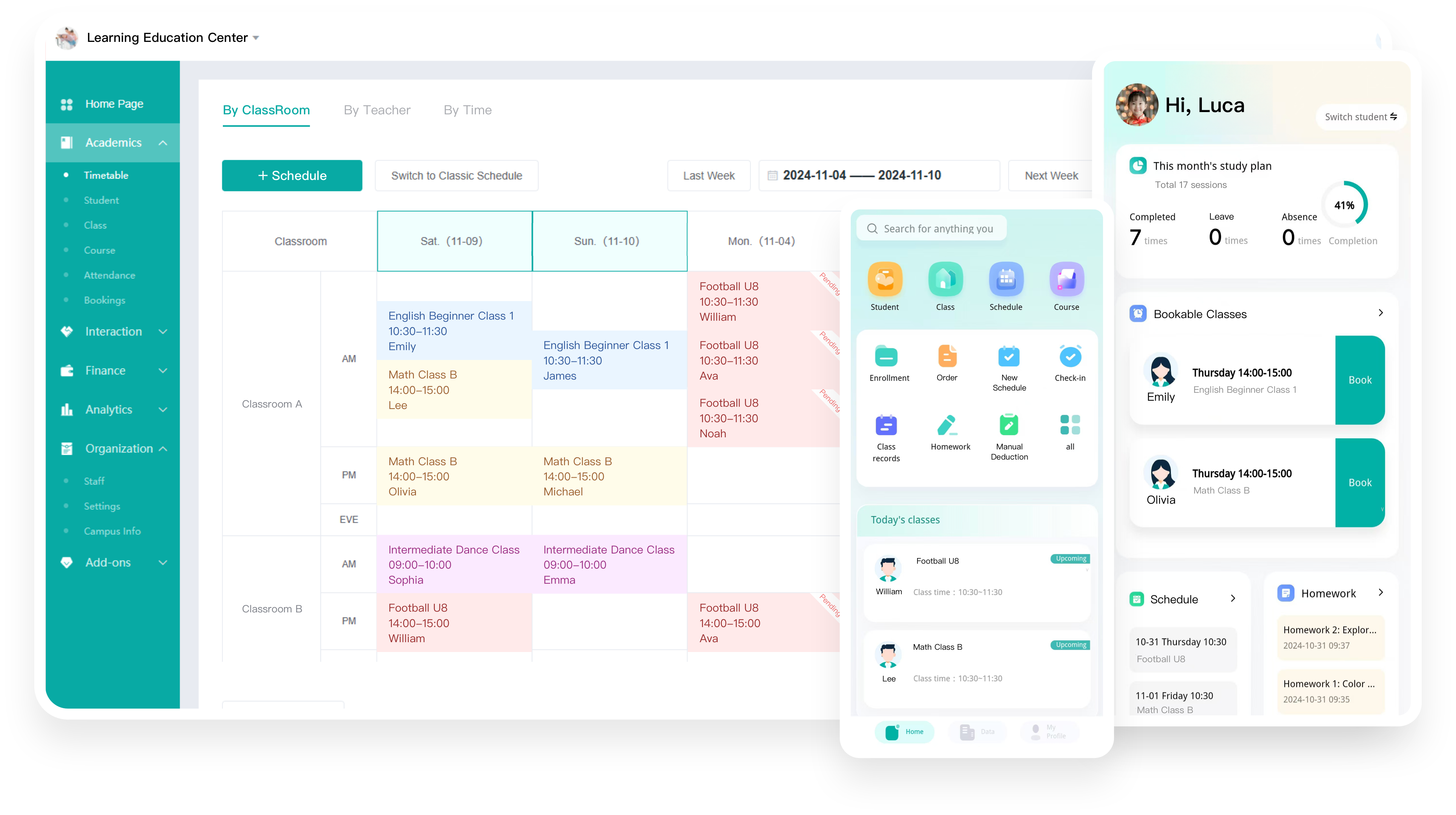
From brand building to channel expansion, from content marketing to event planning, from promotion outlets to cross industry cooperation and development, from new media matrix to communication planning, from customer acquisition costs to ROI analysis, rather than blindly believing that short videos can revive an educational and training institution; -Sales conversion: from sales training to sales management, from sales services to price policies, from sales costs to analysis of conversion rates for various channel orders;
2. Teaching and Service Operations - Product Design:
From course planning, research and development, preparation to standardized delivery, meeting the needs of market competition, from classroom resources to teacher resource arrangement, meeting the needs of maximizing campus utilization efficiency, from teaching standardization to service standardization, meeting the needs of stable and efficient delivery;
Teaching and service training: from teaching training to academic training, from learning data analysis to stage evaluation and assessment, from standardized service types to renewal, student performance introduction, and marketing support training for surrounding courses; -Customer relationship operation: including student interactive activity design, student development and training design;
3. Product and Organizational Operations - Market Testing Operations:
In market competition, continuously improve operational efficiency, design the most efficient business processes through collaboration among different departments, and reduce the phenomenon of departmental overlap and lack of management; -Operation inspection product: Find the optimal product and service design between input and output, reduce heavy course delivery, and minimize the waste of inefficient products on costs.
What is the management of educational and training institutions? Educational and training institution management focuses on how to efficiently organize internal resources such as people, finance, materials, and information to support the smooth operation and promotion of the institution, ensuring the healthy and efficient development of the institution.
Management requires a lot of business operation experience and management experience. Without business experience, it is difficult to identify the root cause of problems and the reasons behind them. Without management experience, there will be a lack of estimation and gaps in policies, systems, and methods, and a rough transfer of business knowledge and experience while ignoring objective conditions and environment.
The purpose of management is not simply to lay off employees, reduce expenses, or lower costs, but to improve efficiency through change.
During the epidemic, many educational and training institutions cut their marketing departments in order to reduce costs, leaving only one or two course consultants. However, a few institutions did the opposite, not only did they not reduce their marketing and sales investment, but also increased their investment efforts to maximize customer acquisition. The same environment leads to vastly different approaches.
The management of educational and training institutions includes the following aspects:
1. Goal management - Goal planning:
In fashionable terms, it means strategy, which determines the development direction, market positioning, product positioning, long-term goals, and short-term goals of educational and training institutions; -Goal decomposition: Decompose the overall goals of the organization into determined, objective, and specific performance indicators for each department, including marketing, sales, teaching, and services. These indicators have a logical relationship before and after, rather than a vision description with overlapping adjectives;
2. Management of organizational construction and planning - organizational design that meets operational needs:
Marketing and sales are completely different business positions, and the logic of designing a business chain with multiple positions for one person is the root cause of reducing operational efficiency; Teaching management is a part of management work and cannot replace the operational functions of institutional performance growth and profit improvement. Teaching led campuses are one of the common problems of low institutional performance;
Recruitment and training that meet operational needs: Efficient and extensive recruitment channels, professional interviews and screening, coupled with complete business training execution, are a reflection of the management efficiency of educational and training institutions; -Salary and performance system to promote campus performance improvement:
Salary is a design that rewards employees based on their work, stimulates work motivation, and is guided by institutional performance goals; Performance is the bottom line design for job retention and competence. If competent, retain; if incompetent, switch. Adequate and continuous screening is necessary to find competent talents.
3. Management to improve efficiency - Enhance business efficiency:
Adjust business processes, shorten information processing cycles, emphasize standardized work behavior structures, and have standardized response measures and behaviors for various business results; -Improve communication efficiency: visually present the progress of various departments and businesses in the organization, which can replace daily and weekly management forms, reduce management costs and time;
Improving management efficiency: High business efficiency + high communication efficiency will inevitably bring higher management efficiency, shorten management time and reduce management costs, reduce a large amount of textual reporting and meeting time, and avoid the phenomenon of management time exceeding business time.