






















Education and training institutions: Scene based enrollment is the most effective enrollment method!
Time:2025-12-19
Source:Artstep
I have seen too many education and training institutions make the same mistake when recruiting students: spending their energy on packaging marketing language, designing low-priced courses to attract traffic, and desperately investing in advertising - these are not useless, but often they work twice as hard. Because you have been pushing information without making parents feel the value.
What is scenario based enrollment?
Simply put, it means making your curriculum appear in real-life scenarios where parents need it the most, and allowing solutions to actively match their needs, rather than creating them out of thin air.
The core logic of scenario based enrollment is to turn "you want to buy" into "I need it".
When are parents most likely to have the impulse to enroll in classes?
Not when I received a sales call, but in the late night when I collapsed from tutoring assignments, in the awkward moment of being called by the teacher to remind me at a parent teacher meeting, and in the comparative scene of seeing other children speak English fluently but my own child can't open their mouth.
Your enrollment actions should be accurately embedded in these scenarios.
How to implement scenario based enrollment? Share three key actions:
1、 Change 'Product Description' to 'Problem Solution'
Don't just list the course features (foreign teachers, small classes, original textbooks), but design your promotional content for specific scenarios.
for example
Scenario: Children always struggle to fill in enough words when writing essays.
Your plan: Use a "five sense observation card" to help children activate their vision, hearing, touch, smell, and taste, and expand a sentence into a vivid description. In on-site or online experiential classes, demonstrate this method directly and show parents the changes in their child's writing within 15 minutes.
2、 Design "experiential" traffic diversion activities instead of "gift based" promotion
Parents attracted by gifts are often only loyal to the gifts. Design an experiential session that allows you to showcase your professional value.
Case: A programming agency set up a booth at a technology festival, not giving away balloons or tipping money, but letting every passing child drag and drop building blocks for 5 minutes to create a simple game that can dodge obstacles. After completion, the child can directly scan the code and share the game in the family group. This action itself is a visual proof of the course effect.
3、 Make senior students your 'live advertisement' for scenario based enrollment
The most convincing scenario is the students who have already made progress with you.
Specific approach: After stage by stage learning, create exclusive "growth moments" for each child with parental consent and encourage them to share. The recognition seen by friends in real life scenarios far outweighs the advertisements placed by the institution itself.
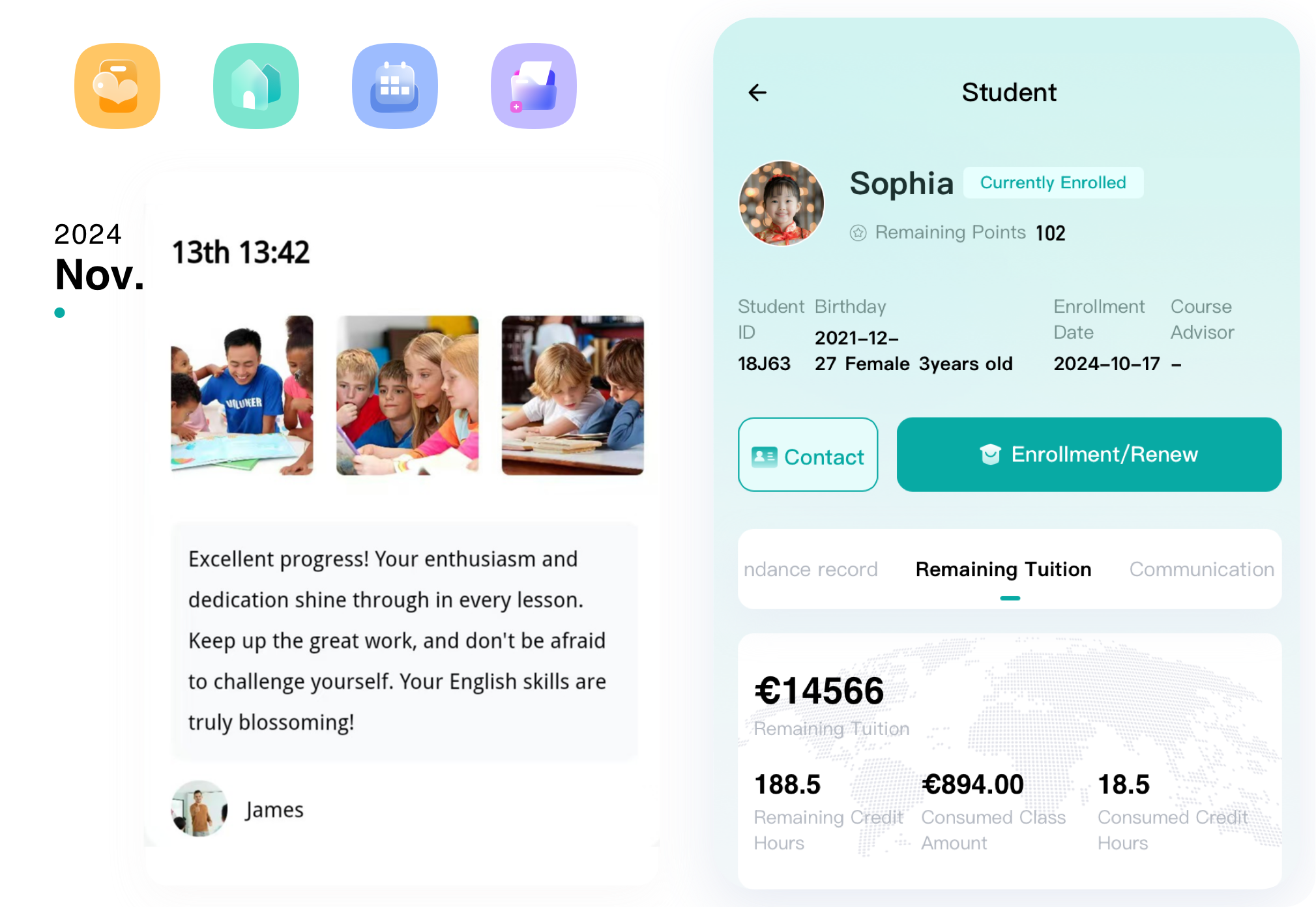
Scenario based enrollment is a transition from "persuasive logic" to "seeing logic". No longer emphasizing how good you are, but allowing parents to see firsthand how your curriculum addresses their pain points in specific and authentic situations.
The highest level of enrollment is not when you persuade parents, but when you create a scene where parents convince themselves.