






















Training institution principals must have management thinking
Time:2025-12-03
Source:Artstep
Without these thoughts, it would be very difficult for principals to manage the campus.
Without goals, unable to make plans, and unable to implement one's own plans.
1. Strategic thinking and business thinking
Institutions are essentially businesses that must generate healthy profits in order to sustainably provide high-quality education.
How to cultivate this kind of thinking:
Market orientation: A deep understanding of the needs, pain points, and willingness to pay of target customers (students and parents), rather than simply offering courses that I think are good.
Clear business model: Clearly understand the profit model of the institution (prepaid, course package, membership system), the cost structure (faculty, venue, marketing proportion), and whether the cash flow is healthy. Do you have a clear understanding of the prepayment mechanism.
Positioning and Differentiation: What is the unique value of your institution in fierce competition? What is your biggest advantage compared to surrounding institutions, top-notch faculty, unique teaching methods, ultimate services, or experts in specialized fields.
Long term planning: At the end of the year, a work plan for the new year should be formulated, with clear annual and quarterly goals (enrollment goals, revenue goals, course consumption goals, reputation goals), and broken down into executable plans.
2. Product thinking
The training course is your product, and the curriculum system must be polished with the ingenuity of making the product. We must know what students have learned and what value students/parents have gained, rather than wanting to take this course.
Parental perspective: Does curriculum design really solve students' problems? Has it improved students' abilities? Is the course experience smooth?
Measurable results: Learning outcomes must have clear evaluation criteria (assessment system, quantitative data, score improvement, ability certification, work display, etc.) and be presented clearly to parents.
Iterative optimization: Continuously iterate and upgrade course content and teaching methods based on student feedback, market changes, and teaching effectiveness. There is no fixed 'good course'.
Standardization and systematization: Accumulate excellent teaching experience to form standardized teaching processes (SOP), lesson plans, and teacher training systems, ensuring the stability and replicability of teaching quality.
3. Data thinking
Accurate data is necessary for judgment and decision-making. Abandoning the concepts of "approximate, subjective, and seemingly", we should use data-driven decision-making.
Key indicator monitoring: closely monitor core data such as course consumption data, renewal rate, full class rate, customer acquisition cost, teacher effectiveness.
Data analysis: Analyze the reasons behind the data. Why has the renewal rate decreased this quarter? Is it a teacher issue, a course issue, or a service issue? Which enrollment channel has the highest conversion rate?
Scientific decision-making: Based on data, decide whether to open new campuses, launch new courses, adjust pricing strategies, or increase investment in certain areas.
4. User mindset (service mindset)
Education is a service industry, and the ultimate student and parent experience is the source of reputation.
Full process experience: Focus on the entire process from consultation, trial listening, registration, class, feedback, renewal to course completion, creating unexpected experiences at every touchpoint.
Effective communication: Establish open, frequent, and valuable communication with parents, allowing them to perceive their child's progress and the institution's dedication.
Resolve complaints: Treat every complaint as an opportunity to improve operations, quickly and properly resolve issues, and even convert dissatisfied customers into the most loyal promoters.
5. Leadership and Talent Thinking
The principal does not need to personally handle everything, but must achieve goals through a team.
Breeding and retention: Knowing how to recruit outstanding talents (not only teaching talents, but also operation and sales talents), and willing to invest resources to cultivate them (perfect teacher training system, career development path).
Empowering rather than controlling: Set clear goals and rules for the team, then fully empower them to stimulate their subjective initiative and creativity.
Cultural construction: shaping the mission, vision, and values of the institution, creating a positive, student-centered, and trusting team atmosphere. Don't create too much clutter, it's actually quite troublesome to implement.
Coach role: Help team members grow, solve problems, rather than just blaming.
6. Process oriented and systematic thinking
Efficient operation means simplifying complex problems, streamlining simple problems, and systematizing process problems.
Establish SOP: Develop standard operating procedures for all repetitive tasks such as lesson preparation, teaching, customer service response, and marketing to ensure stability in efficiency and quality.
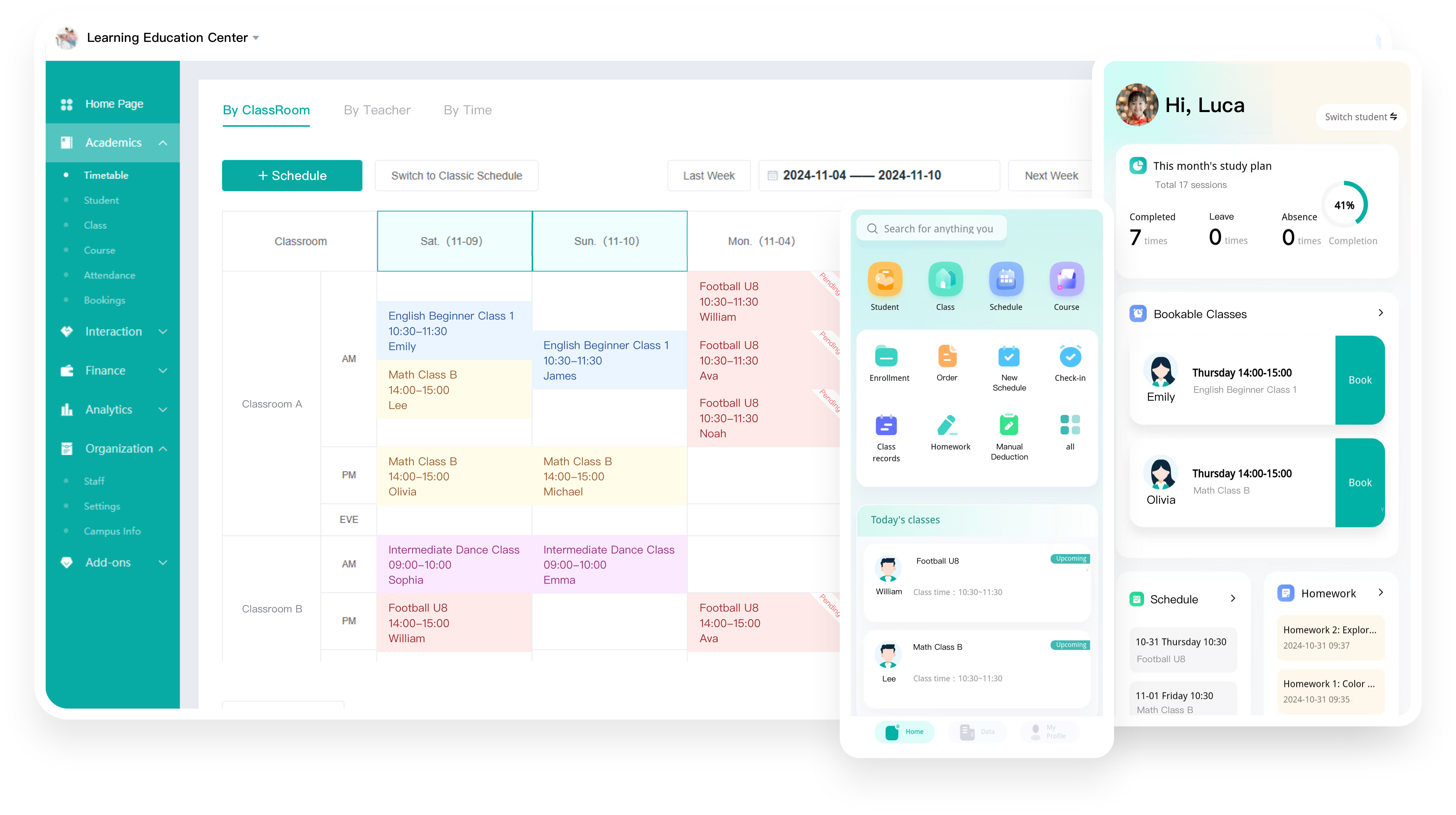
Leverage utilization: make good use of technological tools (such as the Artstep educational management system) to improve efficiency, reduce human errors, and free up manpower to do more valuable things.
7. Risk and safety thinking
The education industry has strong policy sensitivity and must operate legally and compliantly.
Policy analysis: closely monitor changes in policies and regulations in the education industry (such as fund supervision, school qualifications, teaching content restrictions, etc.), and adjust operational strategies in a timely manner.
Financial security: Strictly manage cash flow to avoid blind expansion leading to a broken funding chain. Understand the responsibilities and risks behind the prepaid model.
Safety bottom line: Prioritize student safety and faculty safety, establish sound safety management systems and emergency plans, and purchase insurance for teachers and students at a low price while also providing protection
8. Innovation and Growth Thinking
Satisfying the status quo is the beginning of decline. The market is changing, customer demands are changing, and technology is also changing.
Embrace change: Actively pay attention to new trends in the industry (such as AI enabled education, short video customer acquisition, and the rise of quality education), and think about how to apply them to me.
Take small steps and run fast: Dare to try new teaching methods, new service models, or new market channels, verify their effectiveness through low-cost pilot projects, and then promote them comprehensively after success.
Lifelong learning: The principal must be a lifelong learner, constantly updating their knowledge structure and management philosophy.