






















Building a Data-Driven Culture in Your Training Center
Time:2025-10-16
Source:Artstep
When I first started managing an art and music training center, I used to trust my gut.
I’d look around a classroom, feel the energy, talk to a few parents, and make judgments:
“This course is doing great.”
“That teacher connects better with kids.”
“Maybe we should open another class.”
Sometimes I was right.
But other times, my instincts were completely off.
A class that looked full was quietly losing students every month.
Another one that seemed slow had the highest renewal rate in the entire school.
That’s when I realized — intuition builds culture, but data builds growth.
What It Means to Be “Data-Driven”
Being data-driven doesn’t mean you turn your school into a spreadsheet factory.
It means you build habits — small, consistent habits — where decisions are guided by facts, not just feelings.
In a real training center, that means:
- Teachers know their attendance and engagement trends.
- Managers see which courses are growing — and which are dragging behind.
- Teams share performance reports, not to compete, but to learn.
Data isn’t there to criticize people.
It’s there to help everyone understand what’s working and what’s not — faster.
From Paper Reports to Insightful Dashboards
I used to print reports every month, mark them with highlighters, and try to make sense of the chaos.
It was slow, disconnected, and always one step behind reality.
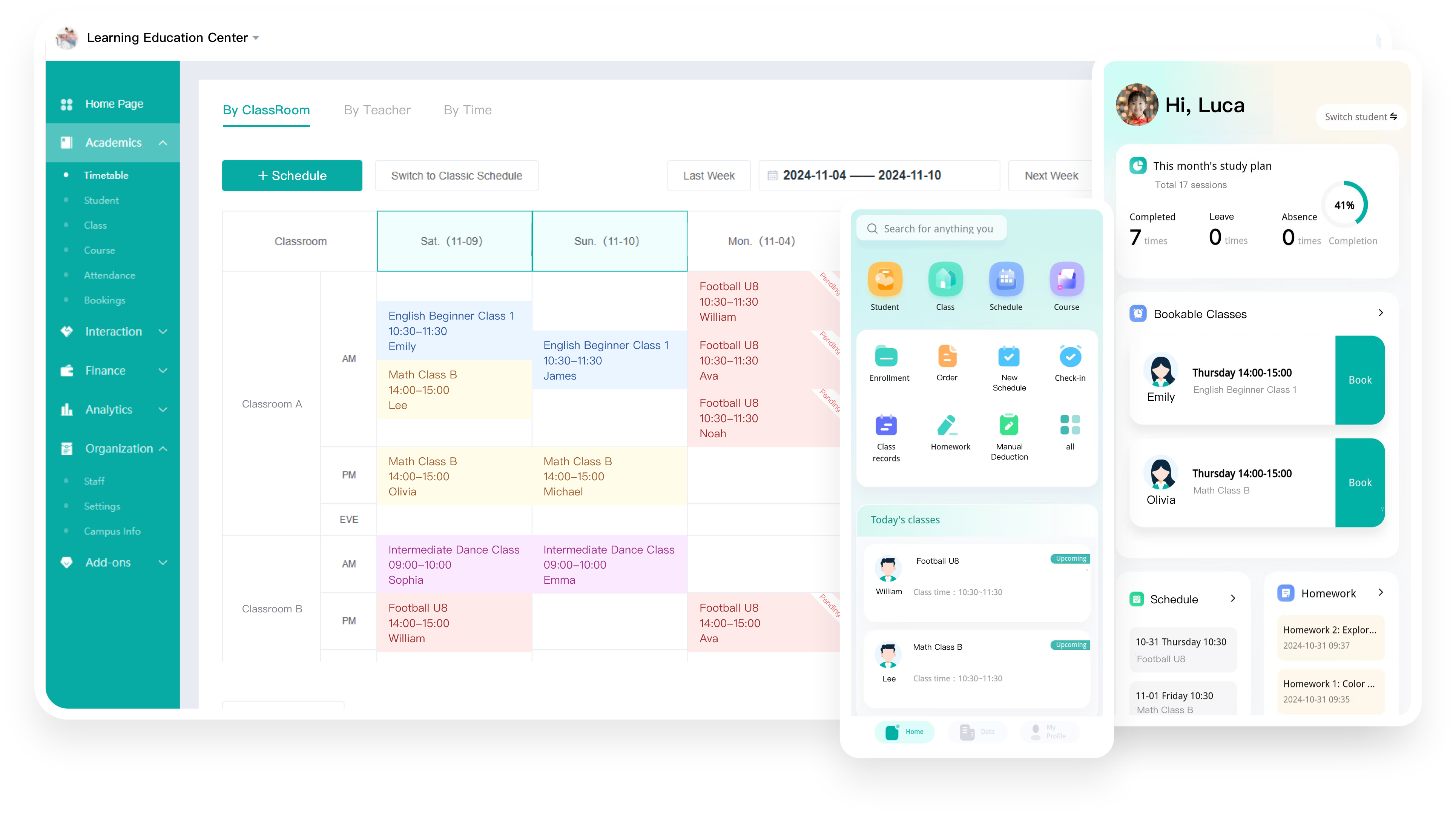
Now, with tools like Artstep’s dashboard and analytics system, that entire process has evolved.
The platform automatically tracks attendance, course popularity, teacher performance, and even payment trends all in one clean interface.
You can see, at a glance:
- Which classes have consistent attendance
- Which programs bring in the most revenue per student
- Which students might be at risk of dropping off
- How your overall retention rate changes over time
It’s not just about knowing — it’s about seeing patterns early enough to act on them.
The Cultural Shift: From Reports to Conversations
The biggest breakthrough came when I stopped treating data as “management material” and started sharing it with the team.
We began holding short weekly huddles around the dashboard:
- “Why did this class’s attendance drop 10% last week?”
- “What did this teacher do differently that kept students fully engaged?”
- “Can we replicate that in other groups?”
When everyone starts asking questions like that, data stops being intimidating.
It becomes a shared language — a way to learn together.
What Data Can Actually Change
A true data-driven culture transforms more than just strategy.
It affects how your entire organization thinks.
Here’s what I’ve seen firsthand:
- Clearer priorities. Instead of chasing every trend, teams focus on the top three metrics that matter — like retention, attendance, and satisfaction.
- Faster adjustments. Teachers no longer wait until the semester ends to tweak lesson flow — they can see drop-offs early and adapt mid-course.
- Shared accountability. When data is open and visible, there’s no blame game — just collective ownership.
Why Systems Like Artstep Matter
You can’t build a data culture on spreadsheets alone.
You need a system that collects, connects, and communicates the numbers for you.
That’s exactly what Artstep does.
Its analytics tools automatically pull real-time data from attendance records, class schedules, and student progress reports — presenting them through intuitive dashboards that anyone can understand.
More importantly, it helps teams share insights easily:
You can export weekly summaries, highlight success stories, and even visualize growth trends for meetings or staff training.
The result?
A culture where people don’t guess what’s happening — they know.
And that confidence leads to smarter decisions, more engaged teachers, and happier students.
Final Thoughts
The heart of education will always be human — intuition, connection, inspiration.
But intuition without information is just a guess.
And in a competitive training market, guessing isn’t a strategy.
Building a data-driven culture isn’t about becoming robotic.
It’s about using clear insights to free up your team’s creativity, not replace it.
When everyone — from teachers to administrators — can see progress, success stops being abstract.
It becomes measurable, repeatable, and scalable.
And that’s the foundation every thriving training center needs.