





















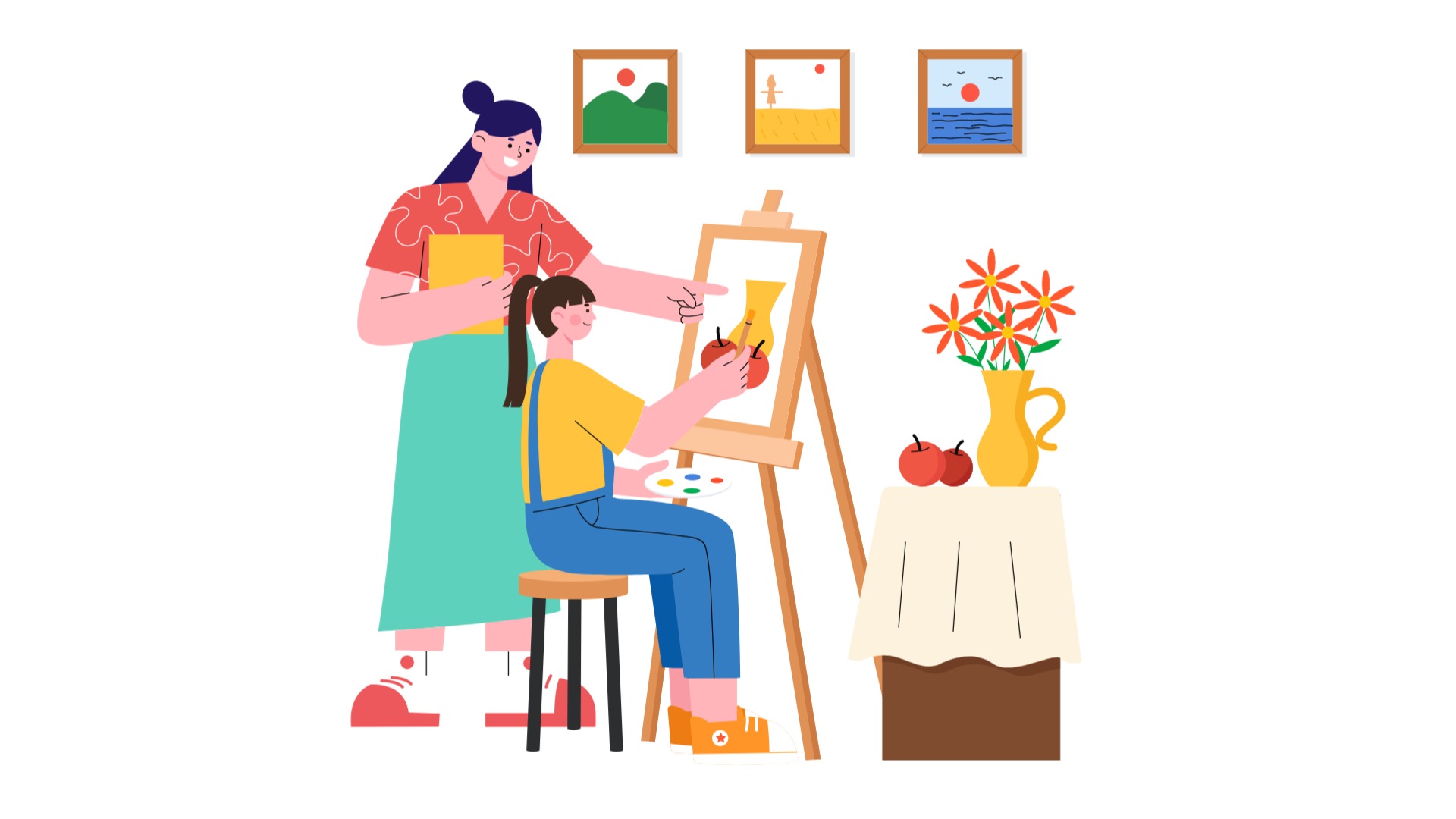
How to make children's pictures more storytelling
Time:2025-12-01
Source:Artstep
Many children have a lot of things and beautiful colors on their drawings, but the images are not vivid and lack a sense of storytelling.
Because they only list what they see with their eyes and imagine in their hearts through a paintbrush, without allowing these different elements to relate, as if drawing a list of items rather than a complete artwork.
In fact, "storytelling" is not a complex technique. We make the characters or scenes in the picture have emotions, actions, and causality.
That scene easily carries a sense of storytelling.
1、 Help children establish 'story thinking'
Starting with storytelling and drawing, let the child "tell a story" before starting writing: "Who do you want to draw? What are they doing? Why is this happening.
For example, it's not 'draw a dog', but 'draw a dog waiting for its owner to come home on a rainy day'.
You can help children conceive like this:
Who is in the painting?
What are they doing?
What happened?
Guide children to draw 'time' or 'change'
Let them imagine the scene as a 'moment' of the story, such as' just happened ',' happening ', or' about to happen '.
For example, it's not 'a little girl in the park', but 'a little girl chasing a balloon blown away by the wind'.
2、 Telling stories with "actions" and "expressions"
Encourage children to express themselves through body language.
For example, running arms, flowing hair, and bent legs are all evidence of the 'story'.
Children can pose themselves for photos or imitate characters.
Guide children to depict changes in facial expressions.
Question: "Is he happy now, angry, or a little nervous.
The richer the expressions and the more vivid the emotions in the picture, the easier it is for the audience to "understand" the story.
3、 Make the elements in the picture 'related'
Guiding the 'line of sight relationship' during composition.
Who is watching whom?
Which action leads to the next one?
For example, when a kitten is staring at a fish tank and a fish is looking out, there is a "plot".
Play the 'relay composition game' in class.
The teacher first draws a character or animal action,
The child then draws' Who is he interacting with 'or' What happened next '.
4、 Accumulate story materials through observation and imitation
Daily accumulation: Encourage children to read more picture books, cartoons, and excellent children's illustrations to cultivate their "narrative vision" in the visuals.
Classroom exercise: Design a "story adaptation" segment, such as having children watch an animation first and then draw the most exciting scene in their memory.
Life observation: Encourage children to record small stories around them, such as "being late for school in the morning" or "not bringing an umbrella on a rainy day", which can become creative inspiration.