






















A parent reviewed a student profile that they were extremely satisfied with
Time:2025-11-05
Source:Artstep
Parents are very willing to see their children's growth on campus, so a complete growth file is necessary, including the child's enrollment, class records, classroom performance, post class reviews, homework, assessment status, renewal status
This file is not only a tool for parents to showcase their children's growth, but also a tool for teachers to understand their children's situation, because a sufficient understanding of the students can enable teachers to have more targeted teaching communication. Ensure reviews and follow-up teaching plans are tailored for children, providing parents with a high-quality experience.
Make children more determined to choose a certain teacher and make parents loyal fans of the teacher.
1: The first step in establishing a student profile: trial classes are important
A trial class may not necessarily help children master much knowledge, but it can establish a preliminary connection between teachers and parents. At this point, effective communication and a good relationship between home and school can be easily established.
In this process, understanding the needs of parents through questioning and communicating with them to understand the child.
For example, why bring a child to learn dance? Because the child has some hunchback due to incorrect learning posture, and hunchback is the key point. Continuing to consult around this key point can help determine if the child has rounded shoulders or other body problems. The more we understand, the more targeted our communication will be.
These key points are written in the student files for better communication in the future!
2. Step 2 of establishing student profiles: Enrollment assessments must be conducted
Non professional parents often do not have a deep understanding of their children, so assessments are needed to help parents and teachers better understand their children.
Under different evaluation projects and depths, parents will have a deeper understanding of their children's talents and shortcomings.
Based on the different performances of the children in the evaluation project, the teacher's teaching will no longer be confused and can provide more professional and targeted teaching according to the children's situation, which can better meet the needs of parents.
3. Step 3 of Establishing Student Profile: Filling in Enrollment Information
Write more detailed information about the child, including: the child's school (it is necessary to understand the number of students in the institution based on the child's school, and whether activities can attract more children from the school), the child's age (according to the child's size, the class content is more in line with the current student growth pattern), whether the child has studied before (determine which class to assign the child to.
During this process, there is no need to overly recommend courses. The focus is on the child's future development, and the school district will provide parents with high-quality courses.
For parents and children, a teacher from a training institution who understands their child with care is very trustworthy.
Basic information of students, including name, gender, nickname, age, grade level, school, residential area.
Through this type of message, children can be quickly understood, familiarized with their information, and classified by the same school and class, guiding children to refer more students from the same class and school to apply for schools.
What are the student profiles
1. Students' class information, class records, remaining tuition fees.
Through the data here, it is possible to understand the child's attendance, leave, absence, make-up classes, and attendance, and to determine the child's class status based on this data. It is also possible to invite the child to renew their subscription in a timely manner.
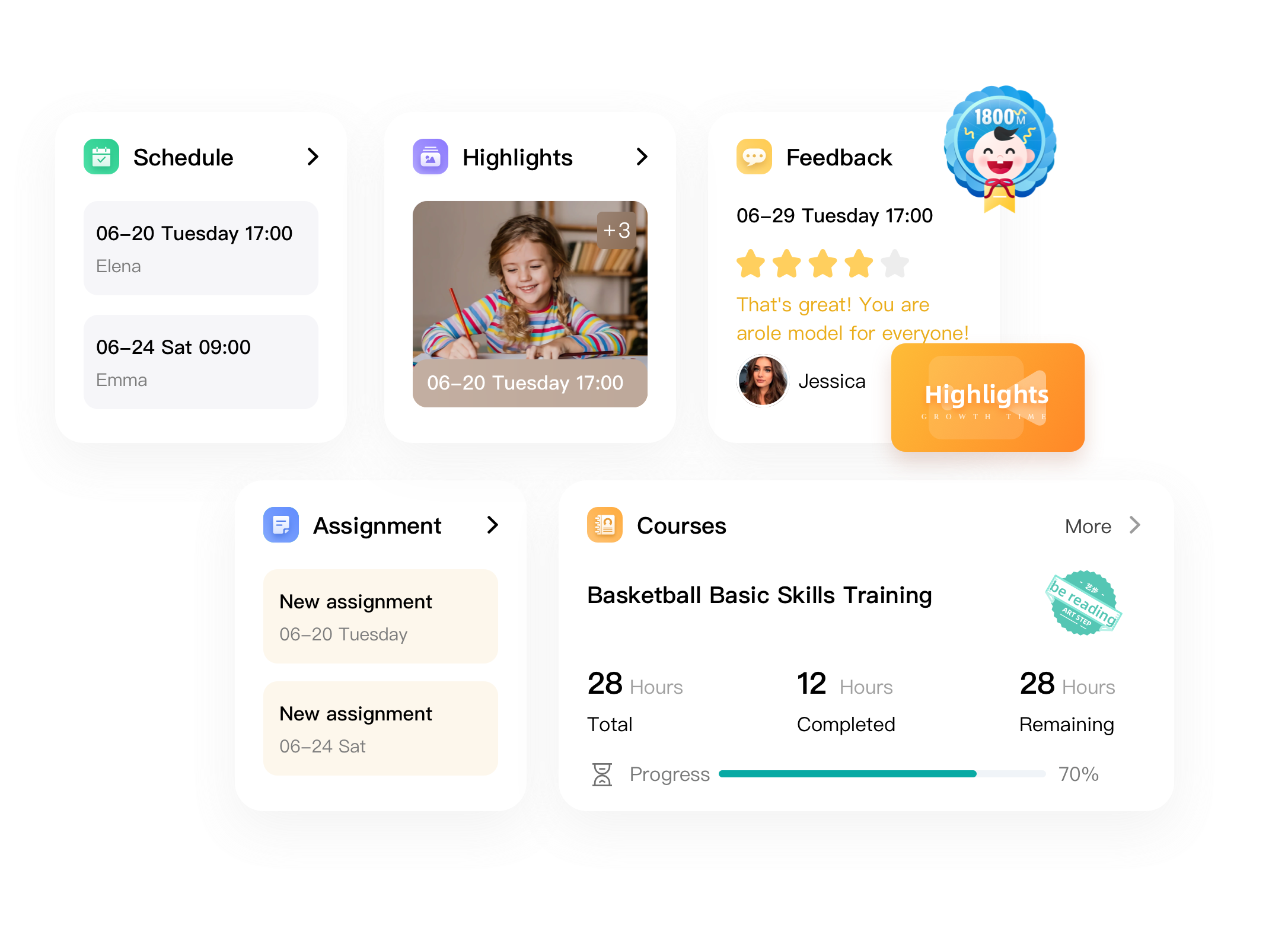
2. Student growth information, growth highlights, assessment reports, honor medals.
This records every time the child grows up and picks up the light during their growth, which can be recorded in the form of pictures, text, and videos, such as more accurate typing and better coordination of limbs. By comparing the evaluation data, parents can see their children's growth more intuitively.
These pieces of information not only facilitate the hierarchical management of the campus, but also effectively enhance campus management through data, and apply student files to various scenarios of campus operation:
Scene One:
Parents can check their children's remaining tuition fees at any time and also know when their children will have their classes cancelled. If parents are not clear about their children's attendance at school, it is easy to have conflicts with teachers and feel that the school's deduction of class hours is not transparent, which can lead to conflicts between parents and the school.
Scene Two:
The teacher has resigned and a new teacher has taken office. They can obtain basic information about the students from their files, understand their class situation, view their growth records, and learn about their growth experiences.
Scenario Three:
The principal wants to know the class data of a certain student, and can directly view it in the student file without looking through the child's attendance record.
Scenario Four:
Teachers who want to have in-depth communication with parents of a certain student can use the student tags in the student profile to conduct in-depth communication based on the needs of the parents and solve their problems.
Scenario Five:
Teachers can obtain personalized information about students from their profiles, such as: if a child is introverted but loves comics, teachers can interact with them in class based on their personality and guide them to be more engaged in classroom teaching.
Scenario Six:
After the teacher conducts a roll call on their mobile phone, the student's class record will be updated immediately and recorded in the student's file, truly achieving the goal of updating data instantly as long as the student takes action, and every piece of data is the latest.
Only when student profiles become digitized, refined, and systematic can we truly make campus work more efficient.