





















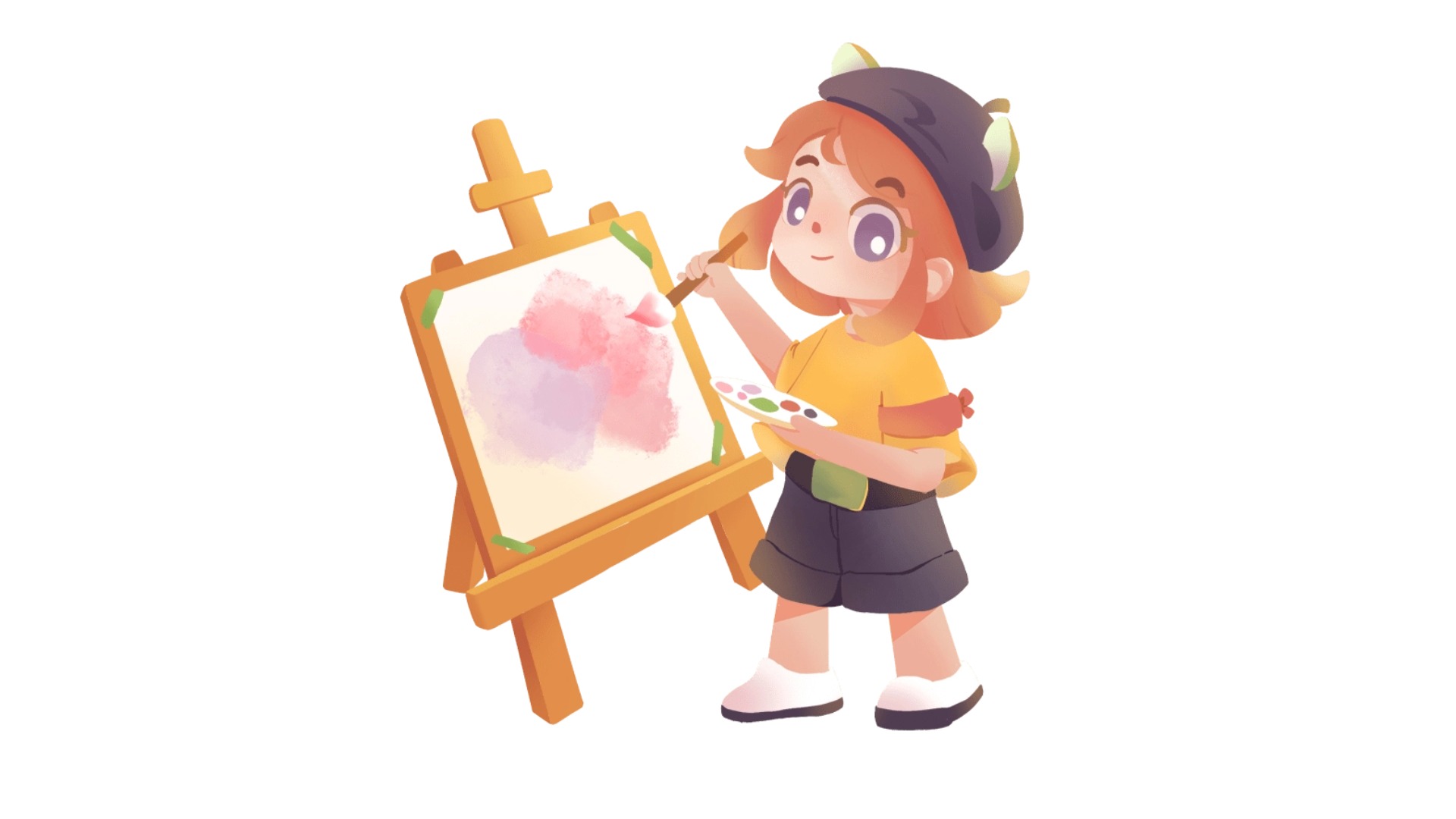
The Educational Value and Growth Power Behind Drawing
Time:2025-10-30
Source:Artstep
In many parents’ eyes, children’s drawings are just “random doodles” — a casual pastime with little connection to academic learning. But in reality, drawing is far more than just “playing around.” It plays a profound role in developing a child’s observation, memory, imagination, creativity, hand–eye coordination, and sense of aesthetics.
In other words, the moment a child picks up a paintbrush, they’re not just making colorful lines on paper — they’re learning to understand the world, express themselves, train their brain, regulate emotions, and even shape their future.
Let’s take a closer look at why children should keep learning to draw, and the many ways in which art nurtures their growth.
1. Drawing Improves Memory
You’ve probably seen this scene: a child draws a “wobbly little circle” and proudly says, “This is a cloud!”
As adults, we might think, “That doesn’t look like a cloud at all.” But for the child, that circle holds their impression and memory of what a cloud looks like. This is how children use visual memory to record details from life.
Drawing isn’t mere copying — it’s recreation. Children use their brushes to reorganize what they’ve seen and experienced, turning daily life into imaginative expression.
Even when the proportions are “wrong” — like a house too small for its door, or a sun with a beard — it’s actually their memory and imagination working together.
Research shows that when children draw, they unconsciously activate both visual and emotional memory, which helps strengthen their overall learning ability. For example, when memorizing the English word “apple,” they might recall the one they painted; when studying history, they can easily visualize the Great Wall or historical figures they’ve drawn before.
2. Drawing Turns Children into Little Observers
Adults often overlook the small details of life because they’ve become “used to everything.”
Children, on the other hand, are filled with curiosity and see the world with fresh eyes.
When a child draws a “dog with four ears,” adults might find it funny, but it’s actually a reflection of their observation. They may have noticed the way a dog’s ears move or imagined it from a different angle.
Drawing is one of the best ways to train observation. Before starting to draw, children must look closely, analyze shapes, colors, proportions, and details. Over time, this develops a habit of careful observation — one that improves focus in academics and helps them discover beauty in everyday life.
3. Drawing Is a Stage for Imagination
Why do parents often struggle to “understand” their children’s drawings? Because the child’s world is completely different from an adult’s.
In their eyes:
- Flowers can sing,
- The sun can wink,
- Rabbits can fly with balloons,
- And televisions can grow hands.
What adults see as “nonsense” is actually a vivid expression of creativity. When children draw, they are unbound by reality — they dare to paint a person red, a house green, or a cat blue. This is not absurdity; it’s the purest reflection of their inner fairy-tale world.
And this imagination is the source of creativity. A child who dares to “think differently” is more likely to grow into an innovator — someone who’s brave enough to experiment, create, and challenge conventions.
4. Drawing Is an Outlet for Emotion
Many psychologists use drawing to understand children’s emotions — and for good reason. A child may not say, “I’m sad today,” but their drawings can reveal that feeling clearly.
For example:
- Rigid lines and dark colors may reflect anxiety or tension.
- Smooth lines and bright tones often show happiness and security.
Drawing is not only a form of expression but also a way to regulate emotions. When children draw suns, rainbows, or flowers, they’re also “coloring” their inner world.
That’s why drawing helps relieve anxiety and reduce stress. It’s a silent language — a safe emotional outlet for children.
5. Drawing Activates Both Sides of the Brain
The left hemisphere of the brain handles logic, reasoning, and language; the right controls art, imagination, and spatial awareness. In most schoolwork, children use the left brain more — memorizing, calculating, writing. But drawing activates both sides at once:
- The left brain plans: what to draw, how to compose, how to structure;
- The right brain feels: colors, balance, visual flow, and creativity.
When children draw, their brains work at full speed — logic and creativity blend together. This integrated brain workout strengthens problem-solving, learning efficiency, and innovative thinking.
6. Drawing Trains Multiple Skills at Once
You may not realize it, but every time your child draws, they’re practicing a range of abilities:
- Observation: noticing shapes and details,
- Thinking: planning composition and storytelling,
- Memory: recalling images from daily life,
- Coordination: aligning hand and eye movements,
- Expression: communicating ideas visually.
Drawing is a full-brain and full-body activity — a subtle, comprehensive form of training that builds life-long skills far beyond the art itself.
7. Drawing Helps Children Express Themselves
Drawing, like music or dance, is a powerful language of emotion. Every picture a child makes reflects their inner world.
Children who draw learn to express themselves confidently. They don’t rely on “standard answers”; instead, they use color and shape to share feelings and ideas.
This self-expression translates into confidence and independence — qualities that will help them thrive in study, social life, and future work.
At the same time, drawing is a key part of aesthetic education. Through experiencing and creating beauty, children gradually form their own taste and sense of values — something that will shape their character and worldview for life.
8. Interest Is the Best Teacher
Finally, remember this: learning to draw should never feel like a chore. Only when children are genuinely interested will their passion continue to grow.
Some parents push their kids to “draw realistically,” applying adult standards too early — which can quickly kill motivation. In truth, it doesn’t matter if a child’s drawing looks messy or unrealistic. What matters is that they enjoy it, feel free to express themselves, and stay engaged.
As the saying goes, “Interest is the best teacher.” If we protect and nurture that interest, children will naturally go further and deeper in their artistic journey.
Conclusion
Drawing is not just a skill — it’s a powerful form of education and personal growth.
It strengthens memory and observation, expands imagination, helps regulate emotions, stimulates both sides of the brain, builds comprehensive abilities, and cultivates aesthetic awareness.
So, don’t underestimate that little paintbrush in your child’s hand. It’s not a toy — it’s a tool for understanding the world, expressing identity, and shaping the future.
Give your child space, time, and encouragement to draw freely.
One day, you might be amazed to find that in those seemingly simple scribbles lies your child’s purest dreams — and their greatest potential.